What Is a New Construction Radon System?
A new construction radon system is radon protection built into a home while it’s going up. The approach is called radon-resistant new construction (RRNC). Instead of fixing radon after you move in, the house is built to block soil gas and vent it safely outside from day one.
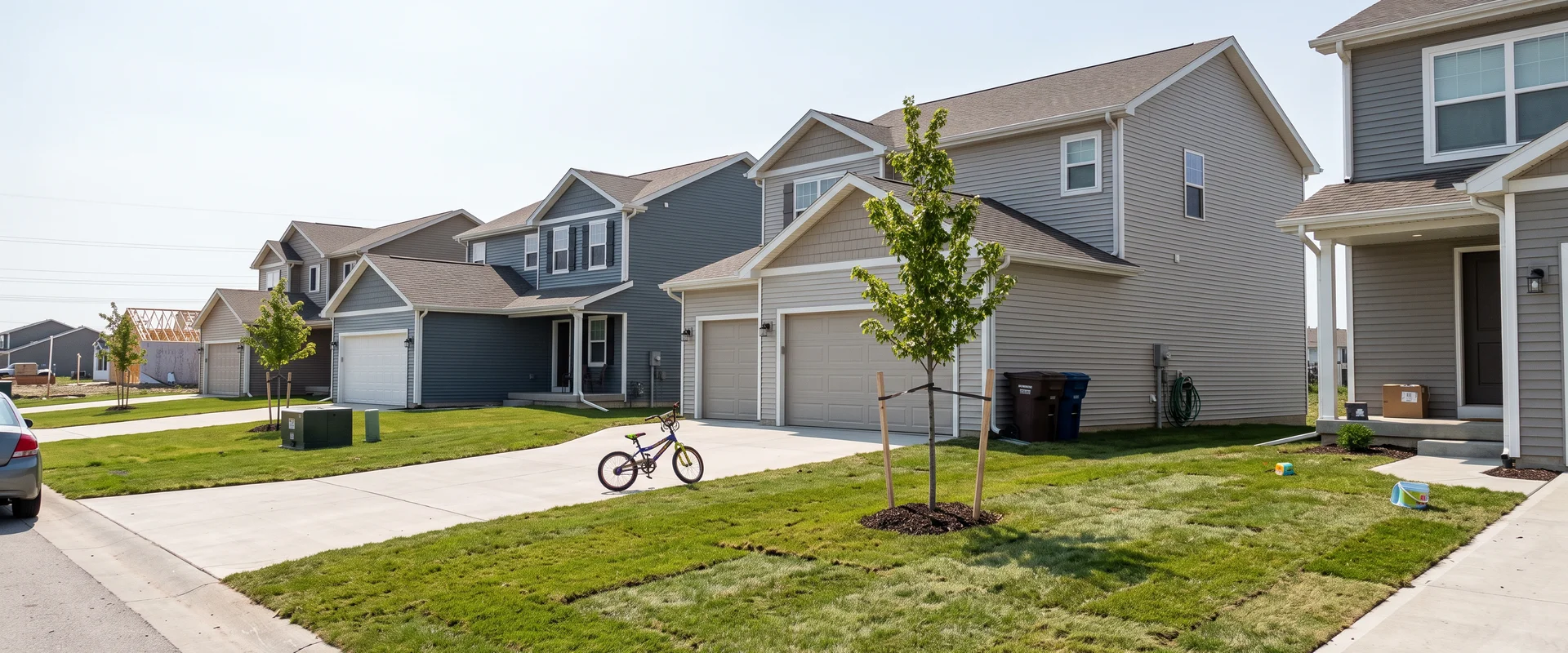
In Iowa, this matters. Every county in the state is in EPA Radon Zone 1, and the glacial soils across Central Iowa release radon into basements and slabs. Building radon control into the foundation is the simplest and most cost-effective time to deal with it.
We work with builders and custom-home owners across Central Iowa. We plan the layout with your builder, show up at the right stages, and leave a system that’s ready to become fully active the moment a test says it should.
What’s in a Radon-Resistant Foundation?
A good build-time system has four main parts:
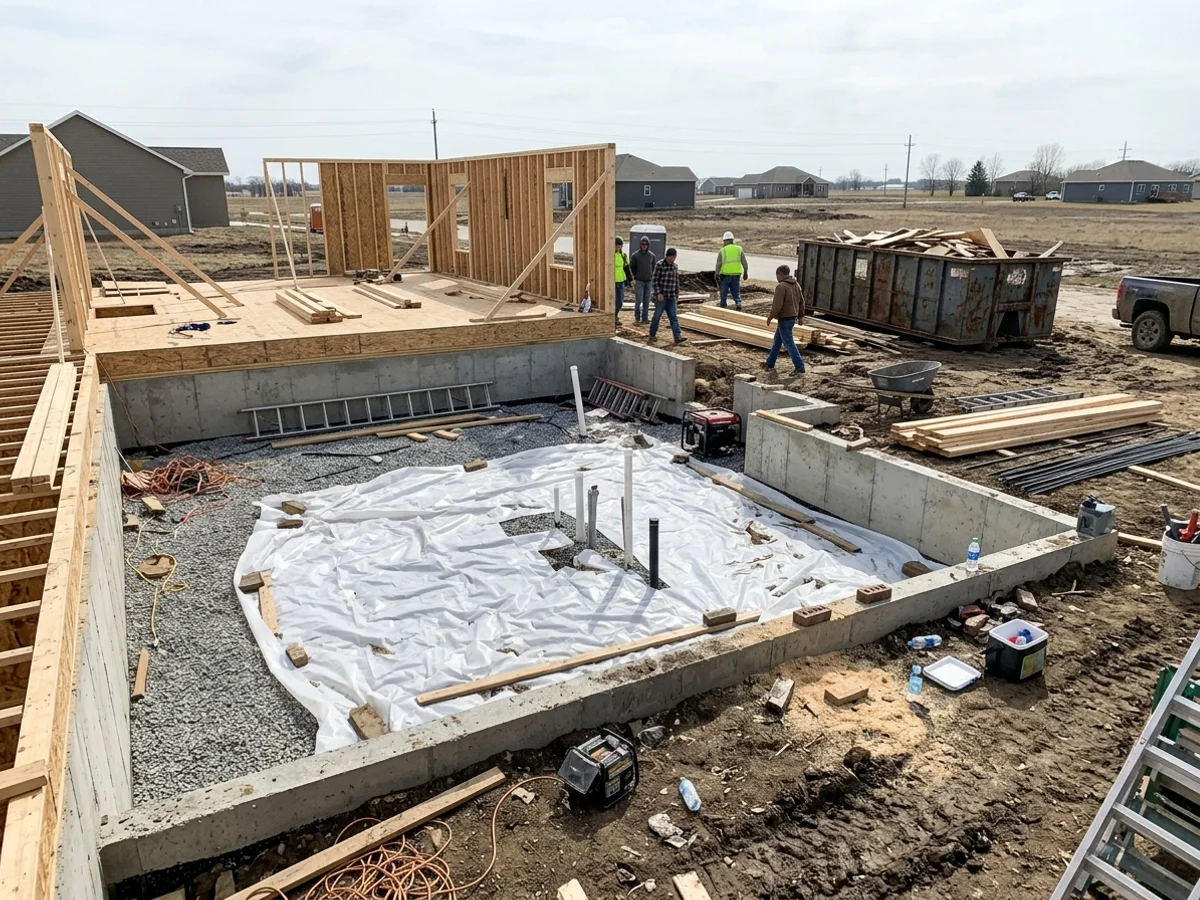
- Gas-permeable aggregate layer. A layer of clean gravel under the slab lets soil gas move freely to a single collection point. Some builds use perforated drain tile in the gravel to help gas flow.
- Soil-gas retarder. A 6-mil or 10-mil polyethylene sheet goes over the gravel, with seams overlapped and taped. It slows radon from rising into the slab.
- Sealed slab openings. Plumbing penetrations, sump pits and control joints are sealed so gas can’t take a shortcut into the house.
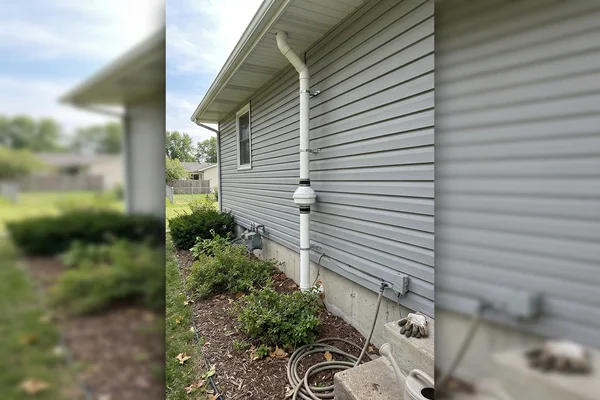
- Passive radon vent stack. A sealed Schedule 40 PVC pipe runs from the gravel layer up through the house to above the roof, with proper roof flashing penetration to keep weather out.
We also install an attic junction box next to the vent stack. That electrical rough-in makes it easy to add an inline fan later.
Passive vs. Active: Why Fan-Ready Matters
A passive stack relies on warm air rising to pull soil gas up the pipe. It can lower radon, but in Iowa many passive systems still test at or above the EPA’s 4.0 pCi/L action level.
An active system adds an inline fan in the attic or garage and a U-tube manometer so you can see it working. Turning a passive system into an active one is called passive-to-active activation. Because the pipe and electrical are already in place, activation is usually done in one afternoon. You can read more in our guide on passive vs. active radon systems.
Standards We Build To
Our layouts follow the radon-resistant construction approach in IRC Appendix F and the ANSI/AARST CCAH standard for new homes. Pipes are labeled, penetrations are sealed and every system is documented so future owners know what they have.
Common Problems We Solve
“Our builder put in a passive pipe, but we tested at 6.1.”
A passive stack alone often isn’t enough in Iowa. We add the fan and manometer, check the suction, and retest. Most homes drop well below the action level.
“We’re building a custom home and want radon handled right.”
Call us before the slab is poured. We’ll review the plan with you and your builder and lay out a system that fits the house.
“We didn’t plan for radon and the slab is already in.”
That’s fine. We can still route a vent stack and design an active system. It’s a radon mitigation retrofit, but planning it before drywall makes it cleaner.
“We don’t know if our new home even has a radon pipe.”
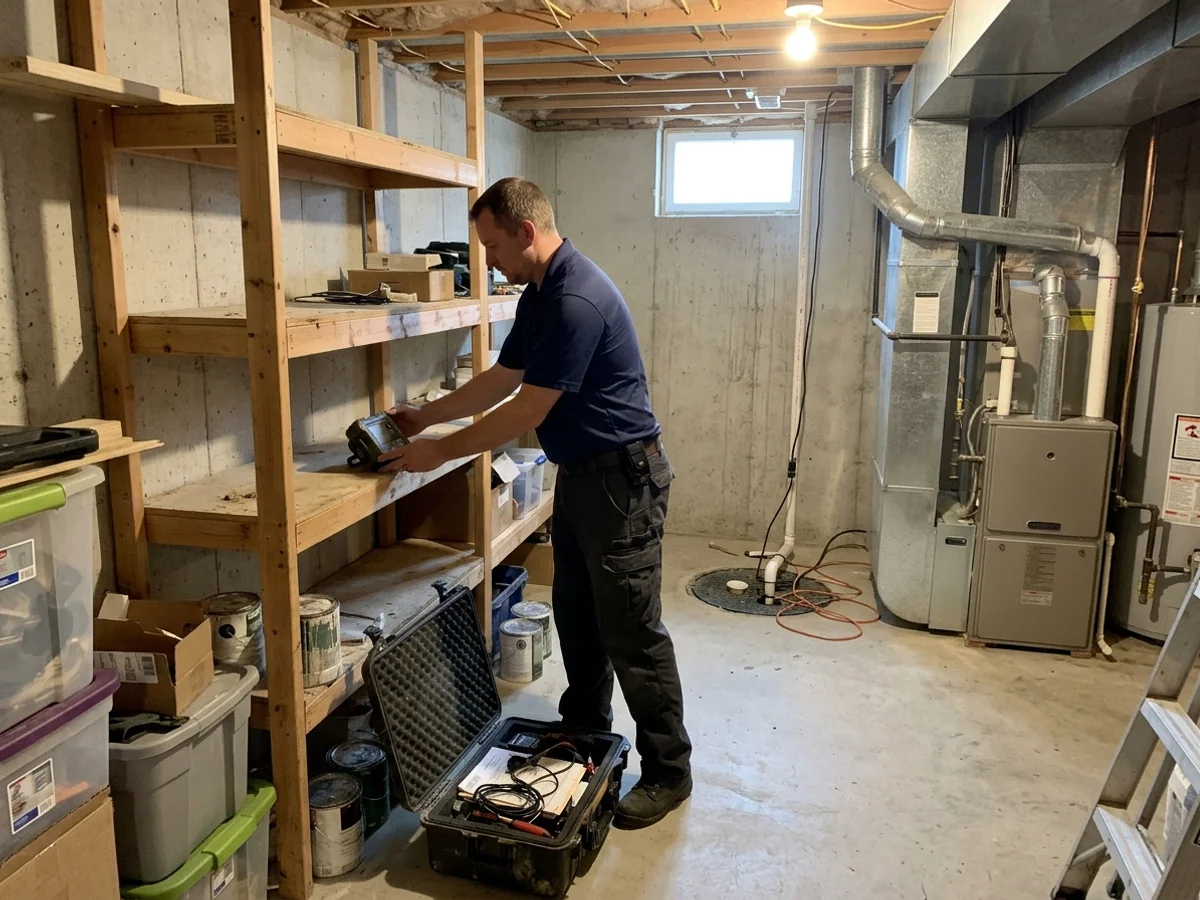
Look for a labeled PVC pipe in the basement or utility room, often near the sump. If you can’t find one, we can check during a quick visit and test the home.
Already Moved In?
Test your home once it’s finished and the HVAC is running. Book a professional radon test and we’ll tell you if your passive system is doing enough. If it isn’t, we’ll make it active and back it with our 5-year warranty.