Home Sales & Homeowners

Certified Radon Testing for Des Moines Homes, Buyers & Sellers

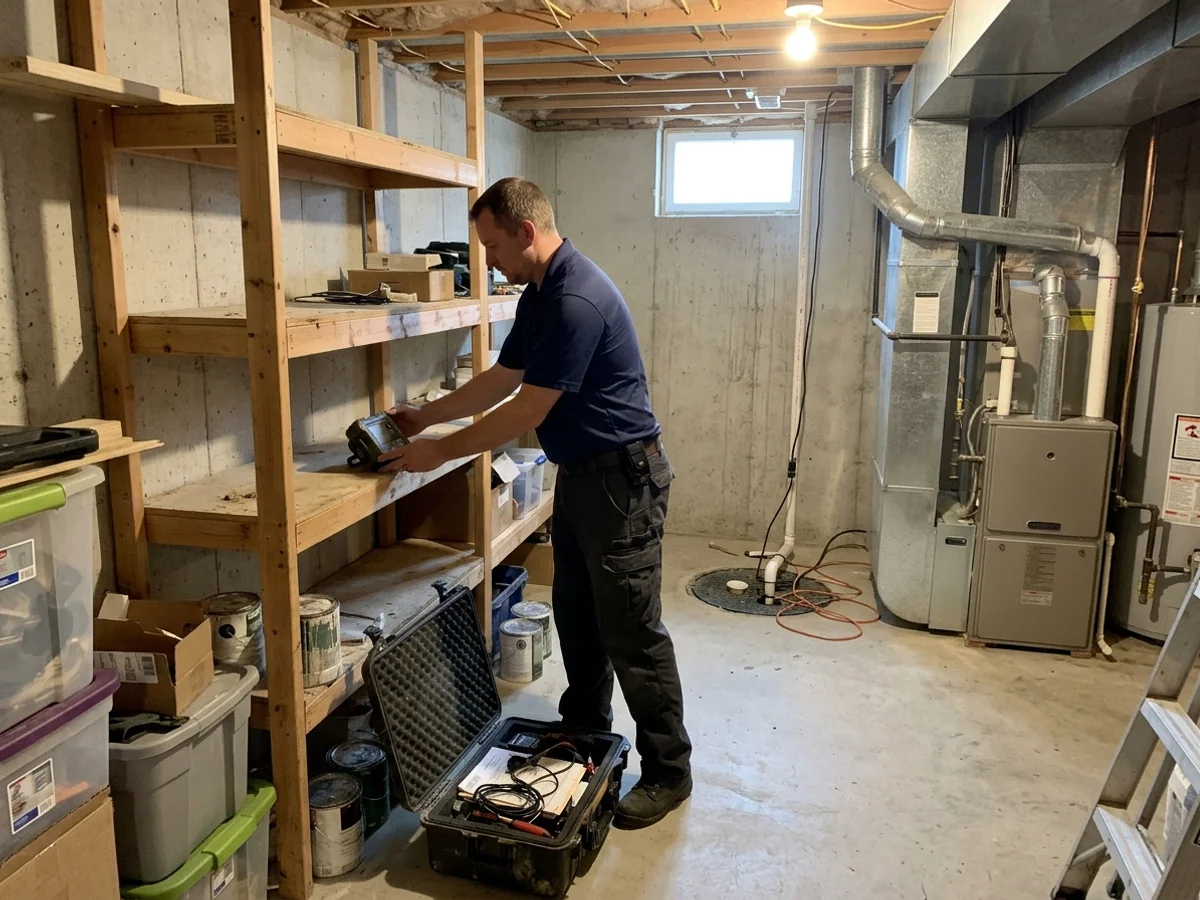
Iowa HHS-credentialed technicians place calibrated continuous radon monitors in the lowest lived-in level for a 48-hour minimum closed-house test, with tamper-resistant placement for real estate. You get hourly data, the average pCi/L and plain-language next steps.

  • 5-Year Warranty
  • 24/7 Support
  • Iowa HHS Credentialed
  • 10 Years in Central Iowa

Or call (515) 218-7447, 24/7.

  • 5-Star Rated on Google, Angi & Facebook
  • 5-Year Warranty
  • 24/7 Customer Support
  • Iowa HHS Credentialed

What Is a Professional Radon Test?

Radon is a gas you can’t see, smell or taste. Every county in Iowa sits in EPA Radon Zone 1, the highest-risk zone, so the only way to know your home’s level is to test it. A professional radon test measures how much radon is in the air of your lowest lived-in level and reports it in picocuries per liter (pCi/L).

We test with calibrated continuous radon monitors (CRMs). A CRM samples the air and logs a reading every hour for at least 48 hours. When we pick it up, you get the average pCi/L plus an hourly graph. That graph shows how radon moved through the day and night, and it makes it easy to see if a window was opened or the monitor was moved.

The test follows 48-hour closed-house conditions. Windows and outside doors stay closed except for normal coming and going, starting 12 hours before the test. That keeps the result close to how your home really behaves when it’s closed up, like most of an Iowa winter.

Our technicians hold an Iowa HHS radon measurement credential and carry national training from NRPP, NRSB, CERTI or ICA School. For real estate, we use tamper detection so buyers, sellers and agents can trust the number.

Who Needs a Radon Test?

Anyone living in Central Iowa should test at least once. Three groups tend to need it most.

Home buyers and sellers

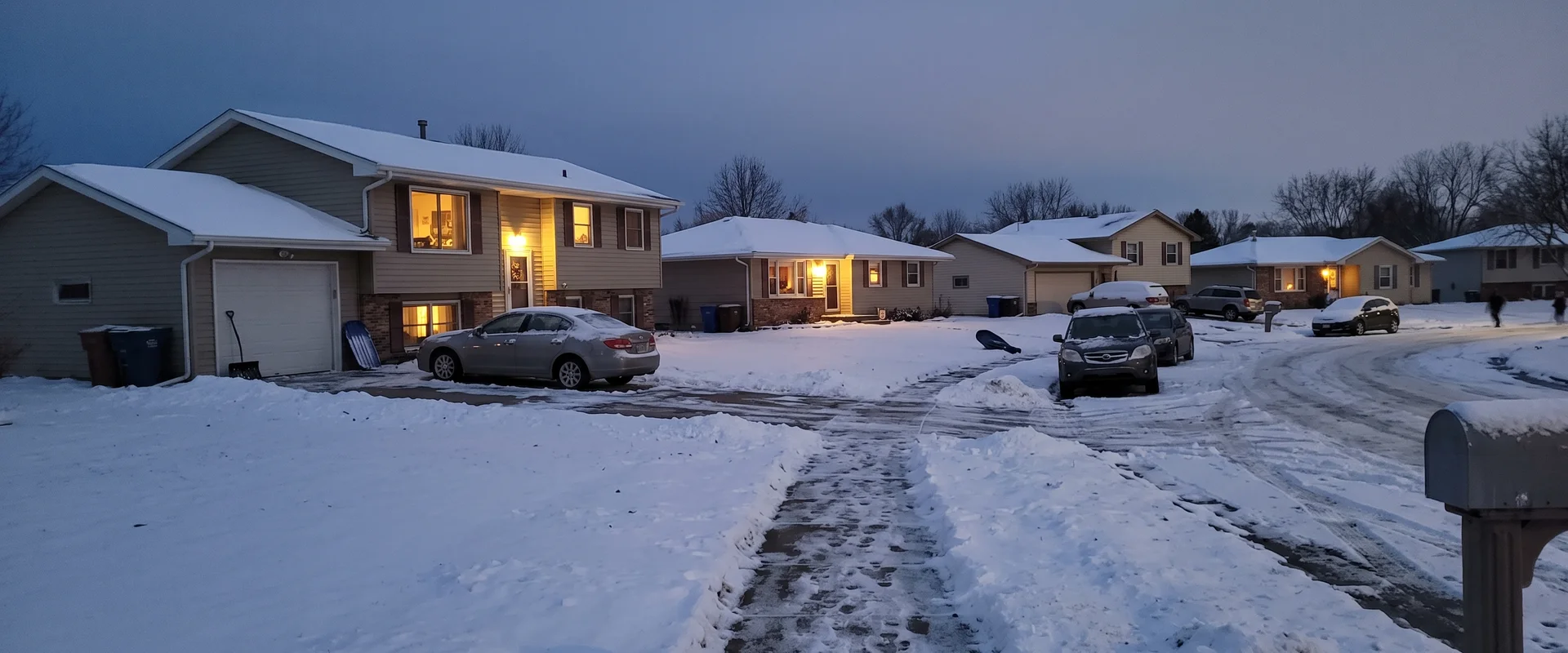
A radon test is a standard part of many Iowa home inspections. Buyers want a defensible result before the inspection deadline. Sellers often test before listing so a high number doesn’t derail a sale late in the process. We schedule around your closing timeline and send a clear report everyone can read.

Homeowners who have never tested

Many Des Moines families have lived in their homes for years without a test. If that’s you, a professional test is a quick way to get a solid answer. If you’ve already used a DIY kit, we can review the result and tell you if a follow-up test makes sense.

Homes with a radon system

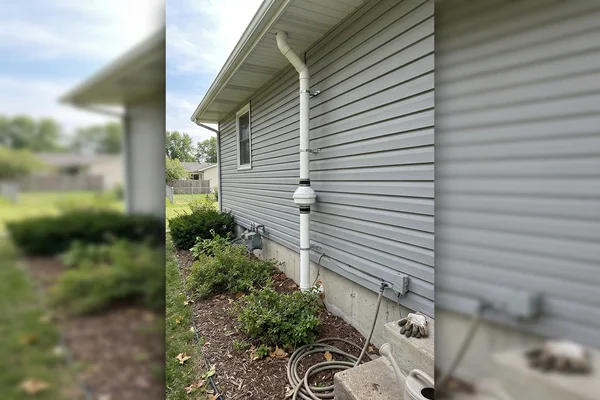
If you already have a mitigation system, the EPA suggests retesting every two years and after big changes like a basement finish. We also run the post-mitigation clearance test on every system we install.

Short-Term vs. Long-Term Tests

A short-term test runs 2 to 7 days. It’s the fastest way to find a problem and the standard for home sales. A long-term test runs 90 days or more and shows a better yearly average, since radon rises and falls with the seasons.

Other devices exist too. An activated charcoal canister absorbs radon and goes to a lab. An electret ion chamber (EIC) measures a voltage drop over time. Both can give valid results. We prefer continuous monitors because they show hourly data, return results right after pickup, and flag tampering.

What Your Result Means

The EPA’s 4.0 pCi/L action level is the point where it recommends fixing your home. Between 2.0 and 4.0 pCi/L, the EPA says to consider mitigation. The World Health Organization uses a lower reference level of 2.7 pCi/L.

If your result is high, don’t panic. Radon risk builds over years, not days. We’ll walk you through your report and what a radon mitigation system would look like for your home. Our systems routinely bring homes above 4.0 pCi/L down below 1.0 pCi/L, with up to 98.9% reduction.

Common Problems We Solve

“Our inspection deadline is next week.”

We book real estate tests fast and work around your inspection period. Tell us your dates when you call.

“My DIY kit said 5.8. Is that real?”

Charcoal kits can be accurate, but placement, mailing delays and open windows can skew them. A professional continuous-monitor test confirms the number with hourly data.

“We finished the basement. Do we need to retest?”

Yes. New walls, a new HVAC layout or a new bedroom downstairs can change how air moves. Retest after big changes, even with a working system.

“Our test was high in winter but low in summer.”

Radon is often higher in heating season because of the stack effect. A long-term test or a winter short-term test gives you a clearer picture.
Pricing

What Does a Radon Test Cost in Des Moines?

We confirm your price when you book. It depends on a few simple things, and there are no surprise add-ons after the test.

01

Type of test

A homeowner screening test, a real estate test with tamper controls, or a post-mitigation clearance test each follow a slightly different protocol.

02

Number of test locations

Most homes need one monitor in the lowest lived-in level. Homes with more than one foundation type, like a basement plus a slab addition, may need two.

03

Timeline

Tests tied to a closing date are scheduled around your inspection deadline. Tell us your dates when you call.

04

Location in Central Iowa

We cover 12 counties from Des Moines. Your town helps us plan the drop-off and pick-up route.

Free Tool

Already Have a Radon Test Result?

Try our free Radon Test Result Checker. Enter your radon test result to see how it compares with EPA and WHO guidance and how much reduction would bring it below 1.0 pCi/L.

Use the Result Checker

Why Choose Us

Why Choose Us for Radon Testing?

Iowa HHS-Credentialed Testers

Every technician who tests your home holds an Iowa Department of Health and Human Services radon credential, plus NRPP, NRSB, CERTI or ICA School training.

Hourly Data, Not One Number

Continuous monitors show how radon rose and fell over the test. That helps spot open windows, weather swings and tampering that a charcoal kit can't show.

Built for Closing Dates

We schedule real estate tests around inspection deadlines and keep buyers, sellers and agents in the loop.

Real People 24/7

Questions about a result at 10 PM on a Sunday? Call us. Someone picks up, day or night.

No-Pressure Advice

If your level is low, we'll tell you. If it's high, we explain the options and let you decide. Testing is never a sales pitch.

One Team From Test to Fix

If you do need a system, the same company designs it, installs it with a 5-year warranty and runs the clearance test.

The Process

How Does Our Radon Testing Work?

Simple steps, clear communication and no surprises.

  1. 01

    Book Your Test

    Call or send a request any time, day or night. We confirm your date, your closing deadline if you're selling or buying, and the closed-house rules to follow for 12 hours before the test.

  2. 02

    Monitor Placement

    A credentialed technician sets the continuous radon monitor in the lowest lived-in level, away from sump pits, drafts and exterior walls. Real estate tests get tamper controls.

  3. 03

    48-Hour Test

    The monitor records radon every hour for at least 48 hours. Keep windows and outside doors closed except for normal coming and going, and run your furnace or AC as usual.

  4. 04

    Report & Next Steps

    After pickup you get a report with the average pCi/L and the hourly graph. If you're at or above 4.0 pCi/L, we walk you through mitigation options with no pressure.

Most tests run 2 to 3 days from placement to report.

Talk to a Credentialed Radon Technician Today

Real people answer 24/7. If you need a system, it's backed by our 5-year warranty and a clearance test.

How Radon Mitigation Des Moines Compares

Feature Typical Provider Radon Mitigation Des Moines
Test device Charcoal kit mailed to a lab Calibrated continuous radon monitor
Results detail One average number Hourly data plus average pCi/L
Tester credentials Varies Iowa HHS credentialed technicians
Real estate tamper controls Not always included Included on real estate tests
Phone support Business hours 24/7
Help if the result is high Referral list Mitigation with a 5-year warranty

Reviews

What Customers Say About Our Radon Testing

Rated 5 stars on Google, Angi & Facebook.

“I called on a Sunday night with questions about our test results and actually got a person. They explained everything without any pressure.”

Dave R.

Urbandale, Iowa

“Our inspection came back at 9.2 pCi/L two weeks before closing. They tested, installed the system and had the clearance test done in time. The follow-up reading was 0.8.”
Megan T. Ankeny, Iowa
“We have a finished basement and were worried about the mess. They ran the pipe through the garage and you'd never know it's there. Clean work.”
Lisa & Mark K. West Des Moines, Iowa

Got Questions?

Questions About Radon Testing & Inspections in Central Iowa

How long does a professional radon test take?

A short-term professional test runs for at least 48 hours under closed-house conditions. We use continuous radon monitors, which record hourly readings, so you get your results quickly after the monitor is picked up.

Can you test during a home sale inspection period?

Yes. We schedule real estate tests around inspection deadlines and use tamper-resistant continuous monitors so buyers, sellers and agents can rely on the results.

What radon level requires mitigation?

The EPA recommends fixing your home if radon is 4.0 pCi/L or higher, and suggests considering mitigation between 2.0 and 4.0 pCi/L. The World Health Organization uses a lower reference level of 2.7 pCi/L. Our systems routinely bring Central Iowa homes below 1.0 pCi/L.

What are closed-house conditions?

Keep windows and outside doors closed for 12 hours before and during the test, except for normal entry and exit. Don't run whole-house fans or window fans. Your furnace, AC and water heater can run as normal.

Is a continuous monitor better than a charcoal kit?

Both can give a valid short-term result. A continuous radon monitor records hourly readings, shows if conditions changed during the test, and gives results right after pickup instead of waiting on a mailed lab analysis. For real estate, that speed and tamper detection matter.

Where in the house do you place the monitor?

In the lowest level you use or could use as living space, usually the basement. We keep it away from sump pits, drains, exterior walls, heat sources and high humidity, and at least 20 inches off the floor.

Should I do a short-term or long-term test?

A short-term test of 2 to 7 days is the fastest way to know if you have a problem and is the standard for home sales. A long-term test of 90 days or more gives a better yearly average. If a short-term result is close to 4.0 pCi/L, a follow-up test can help you decide.

Are your technicians certified?

Yes. Every technician who comes to your home is credentialed through the Iowa Department of Health and Human Services radon program and holds training from at least one of NRPP, NRSB, CERTI or ICA School.

My result was high. What happens next?

We explain your report and what the number means, then offer an on-site assessment for a mitigation system if you want one. Most installs happen in one visit, and a clearance test confirms the result.

Do I need to be home during the radon test?

Only for drop-off and pickup. You can live in the house as normal during the 48 hours. Just keep windows and outside doors closed except for normal coming and going, and leave the monitor where we placed it.

Still have a question?

Real people answer our phone 24/7. Ask about a test result, a quote or your existing system.

Support available 24/7

Ready to Book Radon Testing & Inspections in Central Iowa?

Iowa-credentialed technicians, a 5-year warranty on every system, and real people answering 24/7.

  • 5-year warranty
  • Iowa HHS credentialed
  • Clearance test on every install
TAP TO CALL · 24/7 SUPPORT