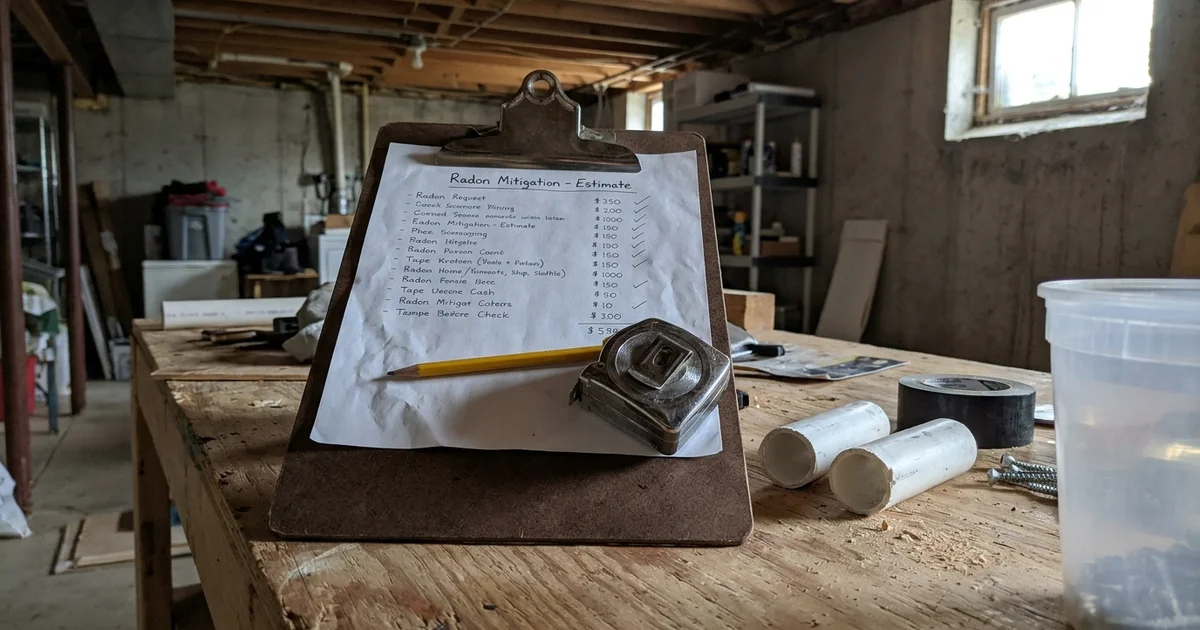
What Does Radon Mitigation Cost in Iowa?
There’s no single price for radon mitigation in Iowa because no two houses are the same. Cost comes down to five things: your foundation type, how many suction points the home needs, how the pipe is routed, how much sealing is needed, and what’s included after the install. A firm quote comes after a short on-site look at your home.
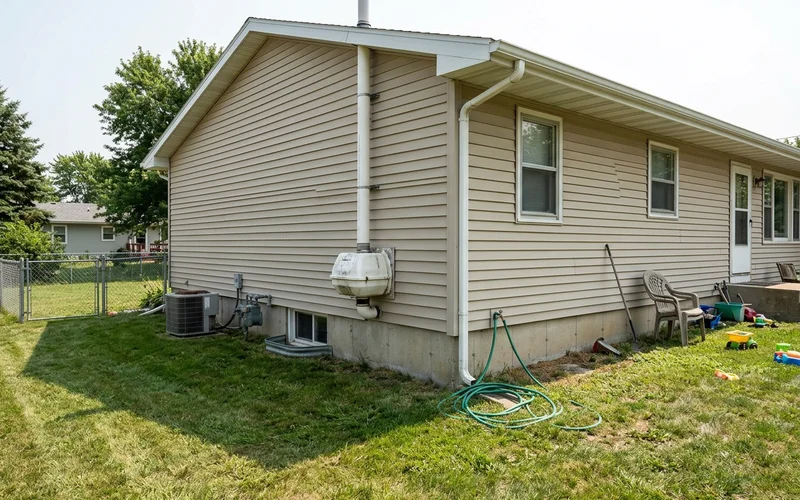
That’s how we price radon mitigation for homes in Des Moines and the 12 surrounding counties. We don’t guess over the phone, and we don’t publish a one-size price that changes once someone sees your basement. Below is what actually moves the number, so you can read any quote with confidence.
Bottom line
The best value is a system designed for your house, installed by a credentialed technician, verified with a clearance test and backed by a written warranty. Compare quotes on those four points, not just the total.
The 5 Factors That Drive the Price
1. Foundation type
A full basement with a poured concrete floor is the most straightforward design. Slab-on-grade homes, crawl spaces and older stone or block foundations each need a different approach. Many Iowa homes mix foundation types, like a basement with a slab addition or a crawl space under a family room. Each area that touches soil may need its own suction point.
2. Number of suction points
One well-placed suction point covers many homes. Tight clay soils, a large footprint or interior footings can block suction from spreading, which means a second point. A pressure field extension test shows us what your slab needs before we quote.
3. Pipe routing
There are two main routes:
| Route | What it looks like | Trade-offs |
|---|---|---|
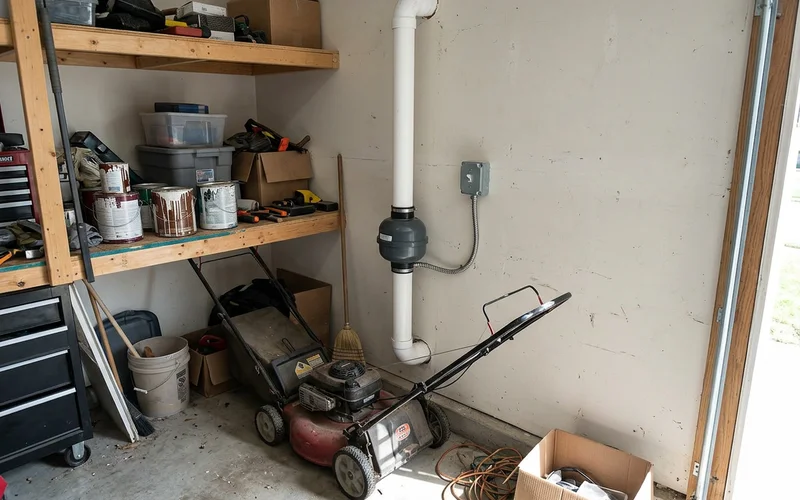
| Interior | Pipe runs through a closet or the garage and exits through the roof | Cleaner exterior look; more planning and finish work |
| Exterior | Pipe exits the rim joist and runs up the siding to above the roof | Simpler install; visible on the outside of the house |
Garage routes are popular in Central Iowa. They hide the pipe and keep the fan out of the living space. Your house layout decides what’s possible. Our guide on how a radon mitigation system works explains why the fan always goes outside the living space.
4. Sealing and crawl space work
Open sump pits need an airtight lid. Large cracks and gaps at the floor-wall joint need sealant. Dirt or gravel crawl spaces need a sealed plastic membrane with suction underneath. More sealing means more labor and materials.
5. What’s included after the install
Read this part of every quote. A complete job should include a U-tube manometer, a system label, a post-mitigation clearance test and a written warranty. Our systems include all four, with a 5-year warranty on the system and installation.
Operating Cost: What the Fan Costs to Run
A radon fan runs 24 hours a day, every day. That sounds like a lot, but most residential radon fans draw roughly 20 to 100 watts depending on the model and how hard your soil makes it work.
Here’s how to estimate it yourself:
- Find the wattage. It’s on the fan label or the manufacturer’s spec sheet.
- Multiply by 8,760, the hours in a year, then divide by 1,000 to get kWh.
- Multiply by your rate, from your MidAmerican or local utility bill.
A 60-watt fan, for example, uses about 525 kWh a year. In winter, a system also pulls a small amount of heated air from the basement, which can nudge heating costs slightly. Sealing major cracks helps keep that low.
Iowa Rules That Affect Cost
Iowa requires anyone who performs radon mitigation for a fee to be credentialed through the Iowa Department of Health and Human Services. That credential, plus national training from programs like NRPP or NRSB, is part of what you’re paying for. It’s also your protection. An uncredentialed installer may charge less, but you have little recourse if the system doesn’t work.
Radon Costs in a Home Sale
Radon often comes up during a home inspection. If a test comes back at or above 4.0 pCi/L, buyers and sellers usually choose one of three paths:
- Seller installs before closing. The seller hires a mitigator and provides the clearance test.
- Credit at closing. The buyer gets a credit and handles the install after moving in.
- Escrow holdback. Money is held until the system is installed and tested.
Timing matters. Most installs are done in one visit, and a clearance test can be run once the fan has been running at least 24 hours. If you’re on a deadline, call early. If you just got a high radon test, that guide covers the next steps in order.
How to Compare Radon Quotes
Line up quotes and check for:
- Iowa HHS credential number for the mitigator
- Number and location of suction points
- Pipe route and where the fan goes
- Sump and crack sealing included
- Manometer and system label included
- Post-mitigation test included
- Written warranty length and what it covers
If a quote is missing items, ask. A lower price that leaves out the clearance test or the warranty can cost more in the long run.
Get a Firm Quote for Your Home
Every home we look at gets a written quote after a short assessment. It shows the design, the route, the sealing and everything that’s included, with no surprise add-ons later. Request a quote or call (515) 218-7447 any time. We serve Des Moines and 12 Central Iowa counties.