What Is Radon Mitigation?
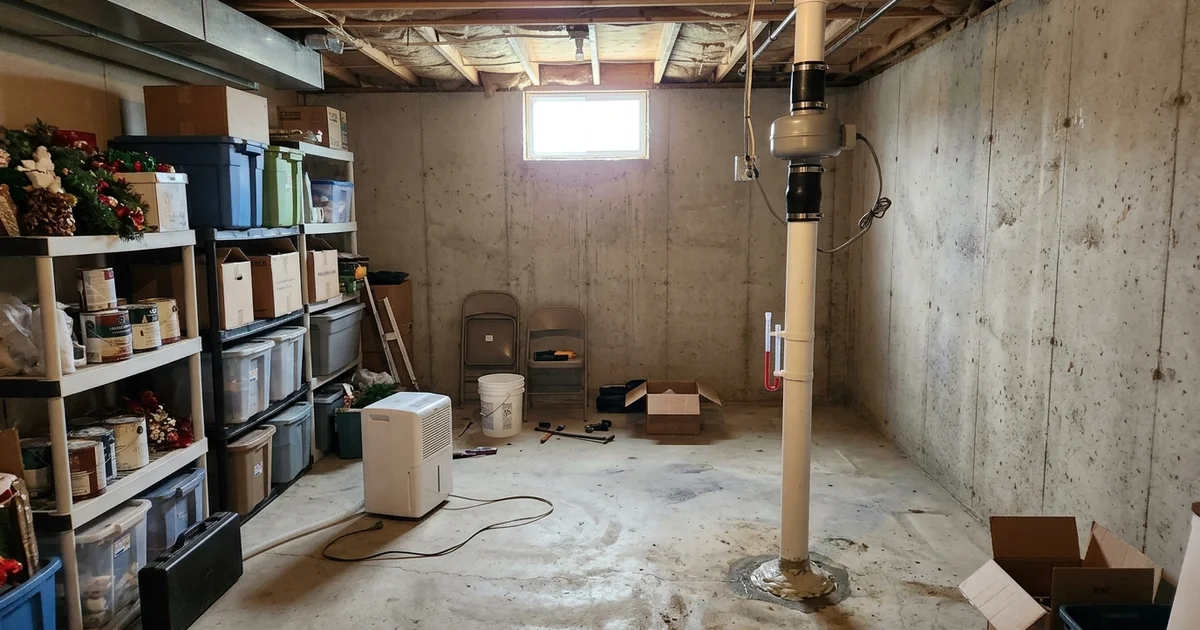
Radon mitigation is any work that lowers the amount of radon gas getting into your home. In Iowa, the most common method is sub-slab depressurization (SSD). A small fan creates suction under your basement floor, pulls radon out of the soil before it can enter, and vents it above your roof where it mixes into the open air.
Think of it like a reverse chimney for the soil under your house. Air naturally flows from higher pressure to lower pressure. Homes, especially in winter, tend to have slightly lower air pressure than the soil around the foundation, so soil gas gets drawn in through cracks, sump pits, floor drains and gaps around pipes. An SSD system flips that. It makes the soil under the slab lower in pressure than your basement, so radon heads into the pipe instead of your living space.
This is what we install every week for radon mitigation in Des Moines and across Central Iowa. On homes testing above the EPA’s 4.0 pCi/L action level, our systems routinely bring levels below 1.0 pCi/L, with up to 98.9% reduction.
The short version
A radon mitigation system is a sealed pipe and a fan that pull radon from under your foundation and send it out above the roof. It runs all the time and you can check it with a simple gauge.
The Parts of a Radon Mitigation System
Every home is a little different, but almost every system we install has the same core parts:
| Part | What it does | Where you’ll see it |
|---|---|---|
| Suction pit | A small hollow under the slab where the system pulls air | Under a sealed hole in the basement floor |
| Schedule 40 PVC pipe | Carries soil gas from the slab to the outdoors | Basement, garage, attic or exterior wall |
| Inline radon fan | Creates steady suction 24 hours a day | Garage, attic or outside wall, never the living space |
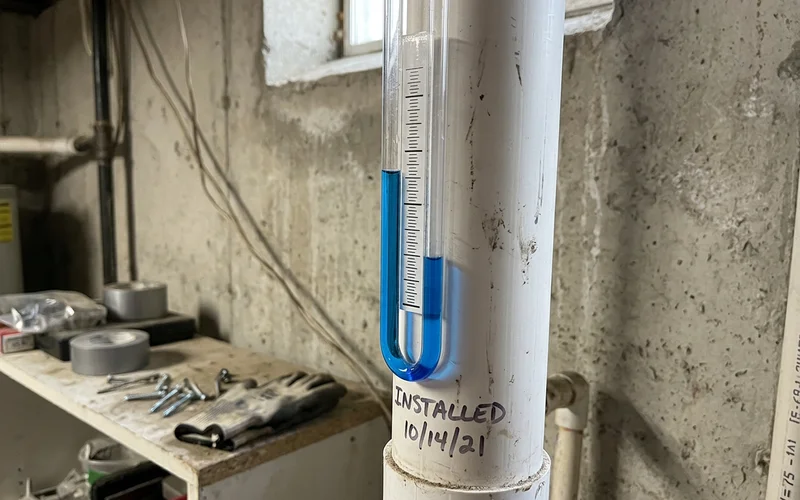
| U-tube manometer | Shows the system is pulling suction | On the pipe, usually in the basement |
| Sealing | Airtight sump lid and sealed major cracks | Sump pit, floor-wall joint, large cracks |
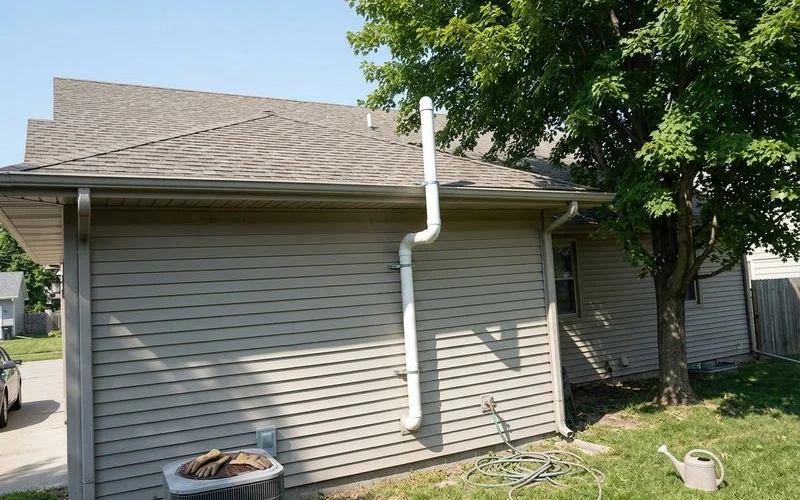
| Roofline discharge | Releases radon above the roof | Above the eaves, away from windows |
Suction pit. We core a hole in the slab and remove a few gallons of soil or gravel. That small open space helps suction spread out under the floor.
Pipe and fan. The pipe connects the suction pit to a radon fan made for continuous use, from brands like RadonAway, Festa or Fantech. The fan always goes outside the conditioned living space, so any leak at the fan stays outside.
Manometer. A U-tube manometer is a simple liquid gauge. When the fan is running, the liquid levels sit offset, measured in inches of water column. If they’re even, the fan has stopped and you should call us.
Other Types of Radon Mitigation
Sub-slab depressurization is the workhorse, but it isn’t the only design. The right system depends on your foundation:
- Sub-membrane depressurization is for crawl spaces with dirt or gravel floors. We seal a heavy plastic membrane over the ground and pull suction underneath it.
- Drain tile and sump suction uses an existing perimeter drain or sump pit as the collection point. The sump gets an airtight lid so the system can pull through the drain tile.
- Combined systems handle homes with a basement plus a slab addition or crawl space. Each area may need its own suction point tied into one fan.
Before installing, a technician may run a pressure field extension (PFE) test. We drill small test holes and measure how far suction reaches under the slab. That tells us if one suction point covers the whole footprint.
Why Sealing Cracks Alone Isn’t Enough
It’s tempting to grab a tube of caulk and seal every crack you can find. Sealing does help. It’s part of every system we install. But sealing alone rarely drops radon enough to matter.
Radon moves through tiny gaps you can’t see or reach: under finished walls, behind stairs, around utility lines and through the concrete itself. Seal the big ones and the gas finds the smaller ones. The EPA has long noted that sealing alone hasn’t been shown to lower radon consistently. The reliable fix is to change the pressure under the slab so radon is pulled away from the house, then seal the major openings so the fan works more efficiently.
How Do You Know It’s Working?
Two ways. First, glance at the manometer. Offset liquid means suction. Second, test. We schedule a post-mitigation radon test after every install to confirm your new level. After that, the EPA suggests retesting every two years and after big changes like a basement remodel.
What It Costs and What Comes Next
Price depends on your foundation type, the number of suction points and how the pipe is routed. Our guide to radon mitigation cost in Iowa breaks down each factor. Every system we install includes a manometer, a clearance test and a 5-year warranty.
If you have a test result above 4.0 pCi/L, or you’re not sure what your number means, get a radon quote. A credentialed technician will look at your home, explain the options in plain words and give you a firm price. You can also call any time, day or night.